Do You Need a Colostrum 'Loading Phase'? Dosing Strategies
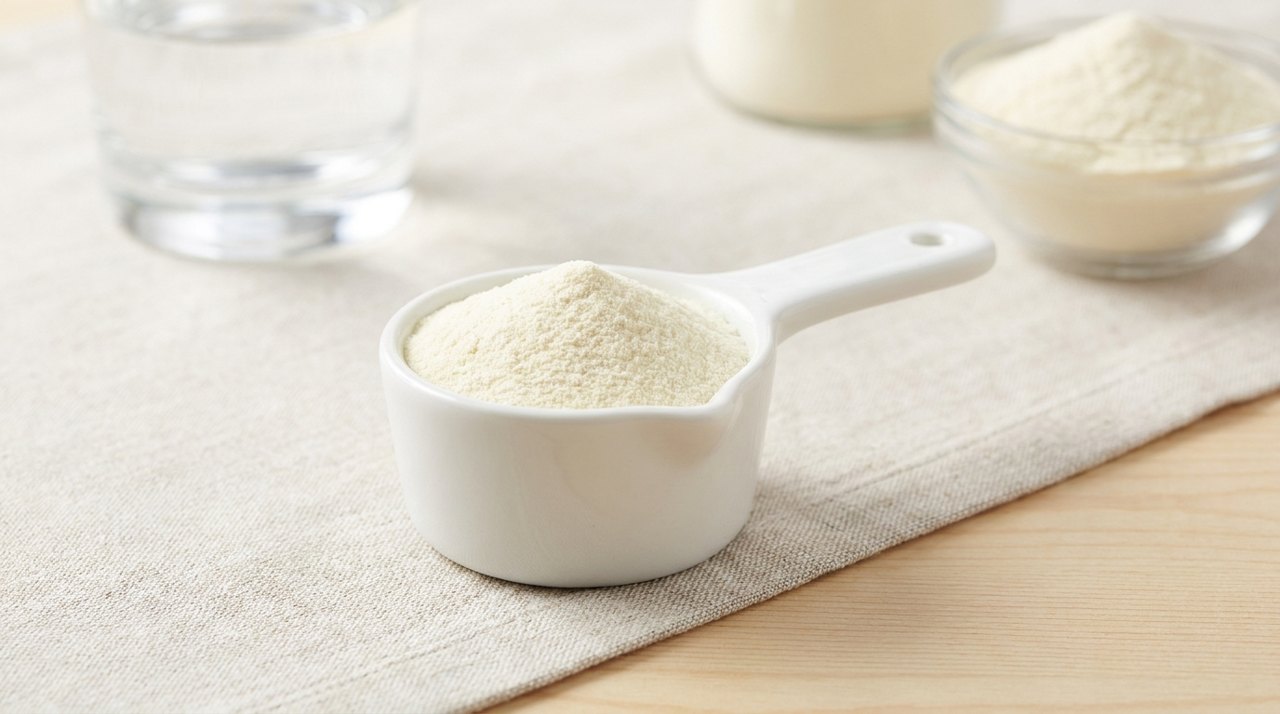
The idea of a "loading phase" comes mostly from creatine, where a few days of high intake saturate muscle stores faster than a standard dose would. That logic gets copied onto other supplements, colostrum included — but the underlying mechanism is different, and the evidence for front-loading colostrum powder is thin. Here's what the research actually used, why titrating up may serve you better than loading, and how to structure a sensible trial.
Why creatine loads and colostrum probably doesn't
Creatine works by filling a measurable reservoir: skeletal muscle phosphocreatine. Load hard, saturate the tank, then maintain it. Colostrum has no equivalent tank. Its bioactive components — immunoglobulins (mainly IgG), lactoferrin, growth factors like IGF-1, and various oligosaccharides — are largely proteins and peptides that act in the gut lumen and on the intestinal lining, then get digested or cleared. There's no established body pool that "fills up" and stays full.
That matters for dosing strategy. If effects depend on what's present in your digestive tract on a given day rather than an accumulated store, then consistency should matter more than a burst at the start. Some studies do suggest changes that persist somewhat beyond the dosing window — shifts in gut microbial composition, for instance — but this is an area where the evidence is genuinely underpowered and inconsistent.
What doses have actually been studied
Published trials have used a wide spread, and almost none of them tested a loading protocol against a steady one. That comparison largely hasn't been run.
| Context studied | Typical daily dose | Typical duration |
|---|---|---|
| Intestinal permeability in athletes | 20 g/day | 14 days to 12 weeks |
| Upper respiratory symptoms in trained adults | ~10–20 g/day | 8–12 weeks |
| General gut-health and immune markers | ~1.5–10 g/day | 4–12 weeks |
| Some clinical/high-dose protocols | up to 60 g/day | varies |
Two things stand out. First, the useful range is wide, which suggests we don't have a well-defined dose–response curve. Second, benefits in these trials generally emerged over weeks of sustained use, not within the first few days — which is exactly the pattern where loading offers the least theoretical payoff.
Shopping for colostrum? Our current best-value pick is BIOMIXA grass-fed colostrum powder on Amazon.
The case against loading, specifically
- GI tolerance. The most common complaints — bloating, gas, loose stools, nausea — cluster at higher intakes and in the first week. Starting high stacks both risk factors at once.
- Lactose. Colostrum powder contains lactose, and the amount varies a lot by product. A 20 g starting dose delivers meaningfully more than 2 g does. People who tolerate colostrum fine at a modest dose sometimes don't at a large one.
- Confounded self-assessment. If you load and then feel off, you can't tell whether it's the colostrum, the dose, or something unrelated. A gradual ramp gives you a cleaner read.
- Cost. Loading burns through an expensive powder for a benefit that hasn't been demonstrated.
A titration approach instead
Rather than front-loading, most people are better served by ramping up to a target dose and holding it. One reasonable structure:
- Days 1–3: roughly a quarter of your intended dose, once daily, with food. You're testing tolerance, not chasing effects.
- Days 4–7: half the target dose, still once daily.
- Week 2 onward: full target dose. If it's above ~10 g, split it into two servings — morning and evening — which tends to be gentler on the gut than one large scoop.
- Weeks 3–8: hold steady. Change nothing else you can help changing, so you can attribute what you notice.
Pick your target from the label first — reputable brands state a serving size, and products differ substantially in IgG concentration, so 5 g of one is not 5 g of another. Comparing on IgG percentage is more informative than comparing on grams. Our how to use colostrum powder page covers mixing, timing, and heat considerations in more detail.
When a higher short-term dose might be defensible
There are narrow situations where people reasonably run higher intakes for a bounded period — an athlete entering a heavy training block, or someone whose target dose in the literature was simply high to begin with (20 g/day, for instance, in the intestinal-permeability work). That's not really "loading" in the creatine sense; it's just choosing a study-aligned dose. If you do it, still ramp into it rather than starting there.
Timing, cycling, and how to judge results
On timing: many people take colostrum on an empty stomach on the theory that less gastric acid and fewer competing proteins mean better survival of intact immunoglobulins. It's a plausible rationale but not well established in humans, and taking it with food is a legitimate trade if fasted dosing upsets your stomach. Consistency beats optimization here.
On cycling: there's no evidence of tolerance building, so no clear reason to cycle. Some people take breaks to reassess whether they still notice a difference, which is a reasonable self-experiment rather than a physiological necessity.
On judging results: give it at least four weeks at your target dose, and decide in advance what you're tracking — digestive comfort, training recovery, sick-day frequency over a season. Vague impressions after five days will tell you nothing useful either way. If you'd rather build it into something you'll actually stick with, our colostrum recipes cover ways to fold the powder into food and drinks without wrecking the texture.
Skip dairy-derived colostrum entirely if you have a milk protein allergy. If you're pregnant, nursing, immunocompromised, or taking prescription medication, talk to a clinician before starting — and treat any product marketing a loading phase as a selling point with appropriate skepticism.
BIOMIXA Bluegrass Colostrum
A grass-fed, unflavored colostrum powder that balances quality and price well — our pick for the best bang for your buck. Check the current price and reviews on Amazon.